• Media Enquiries

    07505 448925(24hr)

Patients win choice of sharing medical records


Earlier this year, we led the concern that a new NHS data sharing plan would see every patient's medical records uploaded to a new information system without the right to opt-out. We warned at the time that patient records would be out of patient control. On Friday, the Secretary of State confirmed that this will not be the case. We have worked closely with MedConfidential and Privacy International to ensure

The snoopers charter is dead


More than a year ago, we learned that the Home Office was resurrecting it's plan to monitor every British citizens' internet use. Big Brother Watch led the charge against these plans, giving evidence to Parliament, urging our supporters to write to their MPs and being the central force in the media campaign against the so called Snoopers Charter. We highlighted how the Home Office had misrepresented the work of

Can you support Sgt Danny Nightingale?


Three weeks today, Sergeant Danny Nightingale will report to the Military Court Centre in Bulford, Wiltshire for a preparatory hearing. This is as a result of the Service Prosecuting Authority exercising its right to seek a re-trial of Sgt Nightingale. Like many people, Big Brother Watch has been dismayed at the treatment of Sgt Nightingale. Despite his conviction being quashed at the Court of Appeal,

Boom in private investigators risks avoiding surveillance regulation


Our latest report highlights the growing use of private investigators by local and public authorities, particularly the number of times they are used without RIPA authorisation. The law in the UK, particularly the Police and Criminal Evidence Act 1984, is broadly drawn to allow evidence to be introduced in court that in other jurisdictions would not be deemed admissible. Contrasted with the fruit of the poisonous

Speed camera snaps stationary car…twice

Posted on by Big Brother Watch Posted in Home | 3 Comments

Speed camera A little way down Jeff Buck's street in Nuthall, Nottinghamshire, there is a speed camera. Due to a lack of off-road parking, Jeff parks his car in the road outside his house. In the past few weeks Jeff has received two different speeding tickets from the camera on his street…while his car has been parked.

I'll let Jeff explain the rest (as taken from the Nottingham Evening Post):

"I assumed the first time it happened that the police would put something in place to prevent it from happening again.

"I'm concerned now that every time someone triggers the camera I'll get these notices. I am amused by it, but also angry that I have to go to the trouble of contacting the police."

Jeff received his latest apology from Notts Police on Monday. He added:

"The photograph must presumably show two vehicles, with mine parked halfway on the pavement and road. It's amazing that whatever system is in place cannot tell the difference between a car that is motionless and one travelling at 37mph."

It truly is amazing, Jeff, and a sad example of the type of flawed surveillance technology our police and councils are coming to rely upon.

By Dylan Sharpe

Private details of magistrates released… to prisoners

Posted on by Big Brother Watch Posted in Databases | 1 Comment

Prison Let's say you're in charge of printing a booklet of contact details for magistrates.  What printing service would you use?

How about your local prison?

Yup, that's what someone in Norfolk did.  Trouble?  Well, they sent the collated personal details of a number of local volunteer judges to serving prisoners.  You'd hope they were in trouble.

The comment I'd make is that magistrates are decent enough to volunteer their time to do, for free, a job that we pay others to do.  The criminal justice system depends on them and in return it ought to protect them.

This kind of error is unforgivably stupid.  Not only is it irresponsible, there’s no conceivable excuse for this kind of administrative incompetence.  Even worse, it makes it less likely that people will serve as magistrates in the future.

By Alex Deane

The FBI faked emergencies to obtain thousands of phone records

Posted on by Big Brother Watch Posted in Home | Leave a comment

Fbi_1 Over at the ever-excellent Register, a story that should make you sit up and smack the monitor -

The FBI fabricated terrorism emergencies to obtain thousands of phone records between 2002 and 2006

The Bureau created "exigent letters" to get around rules that had already been significantly loosened by the Patriot Act. The letters were used to obtain some 2,000 phone records, The Washington Post reports.

Washington Post and New York Times journalists were among the targets.

The internal concerns were confirmed in emails that are part of an investigation by the Justice Department's inspector general, which is due to report this month.

If true, this is just unbelievably wrong.

By Alex Deane

Go to Swansea. Go directly to Swansea. Do not pass GO.

Posted on by Big Brother Watch Posted in Databases | 4 Comments

Logo-dvla As the Daily Mail is reporting,

Millions of motorists' personal details have been sold to 'parasite' parking firms and even rogue clampers by a Government agency in a trade generating £43.9million so far.

What do you mean, you're not surprised? 

This is an abuse of the DVLA’s power, for profit.  You cannot drive without being on this database, so you can’t avoid them having your data.

Given that powerful monopoly position, the DVLA should be more responsible.  Once the data is sold on, what – if anything – stops it being sold on again, or accidentally leaked?

By Alex Deane

“Sheer Practicality” – sheer madness on DNA

Posted on by Big Brother Watch Posted in DNA database | 6 Comments

The second reading of the Crime and Security Bill got underway on Monday, with Home Secretary Alan Johnson facing contempt from all quarters regarding government plans for the retention of the DNA profiles of innocent people on the national database.

Alanjohnson with computer Johnson began by extolling the virtues of the DNA database, claiming that it “has actually been a contributory factor to the astonishing reductions in crime achieved in this country.” The facts, however, provide underwhelming support.

Thankfully, Mr Johnson did address the issue of privacy, stating that “many people find the idea of someone retaining their genetic material disturbing, which is why, this Bill will require all DNA samples – namely, the actual genetic material – to be destroyed after six months. What is retained by the database is the unique 20-digit code that forms the DNA profile.”

Before attending the launch of Big Brother Watch, Conservative MP David Davis was present in the chamber and invoked the example of David Sweeney. In 2004, Mr Sweeney was assaulted by two other men and arrested on a charge of affray, which was then dropped when it became clear that he was not at fault.

Two months ago, however, Mr Sweeney reports that he “dropped a friend off at Manchester Airport and double parked. On returning to my car the police had arrived and given me a ticket. They asked if I was ‘known to the police’ and I said no, having no criminal record. But when they then heard over the radio that I was on the DNA database, they treated me with total contempt—as if I were a serious criminal. ‘You lied to us’, they said. ‘You're on the database. So you’ve obviously done something wrong’”— an interesting assumption— “‘what are you trying to conceal now.’ Sadly, this case is far from unique.

At one point, clearly frustrated by the contempt shown for DNA profiling, Mr Johnson claimed that "after all DNA is a British invention" – granted, we boast an admirable scientific heritage, but our legal system, with those long-forgotten treasures such as Habeas Corpus, is also to be admired.

It was at this point that Shadow Home Secretary, Chris Grayling, asked the pertinent question as to why the government are not proposing a compulsory DNA database for the whole nation. To which the Home Secretary, horrifyingly replied “so far as I am aware, only one country is currently looking at that possibility: the United Arab Emirates. For reasons of sheer practicality, no Government of any persuasion in this country would introduce such a scheme.

So there we have it: "sheer practicality" is all that stands between our current situation and the biometric data of every man, woman and child in Britain catalogued on a government database. Moreover, the 20-digit code is as close an approximation to the ‘actual genetic material’ as is possible. This is poor trickery by the government; the infringements upon our privacy remain in full view.

By Edward Hockings

- – UPDATE – -

There is a full transcript of Chris Grayling's comments to the House available on Conservative Home and is well worth a read.

Meanwhile, from the same debate, David Davies MP (the Tory MP for Monmouth not to be confused with the terrific Davis) caught the eye of Alex Massie at the Spectator. Proving that not all the Tory MPs are singing from the same hymn sheet on civil liberties.

Body scanners – an expensive waste of time?

Posted on by Big Brother Watch Posted in Body Scanners | 2 Comments

Werner Gruber, an Austrian physics professor from the Institute for Experimental Physics in Vienna, has mounted a demonstration that strongly suggests that body scanners are completely worthless.

Werner Demo The good professor smuggled a metal knife, a detonator, and several bottles of explosive powder through the machine and as an added bonus he also managed to smuggle a large quantity of crystal explosives hidden under a plaster stuck to his body.

The government would have us believe that the total body scanner is the new wonder weapon in the fight against terrorism, but in the programme broadcast on the German television channel ZDF the professor smuggled his mini terrorist arsenal through without any problem – the only things picked up by the scanner were his studio microphone and a mobile telephone..!

The manufacturers amusingly claimed that the test was not valid as "things would be different at the airport."

The professor had admitted in advance that he was smuggling a knife and other material to give the testers – who watched the pictures produced by the scanner and tried to spot the smuggled items – a chance to find the kit, but they still failed.

I think this demonstrates the total pointlessness of the full-body scanners that are set to invade our privacy and humiliate passengers at our airports.

While children and families are being subjected to smirking staff with body scanning surveillance, everything these expensive machines should catch goes sailing through.

By Alex Deane

The Official Launch of Big Brother Watch

Posted on by Big Brother Watch Posted in Events | 3 Comments

As many reading this will be aware, Big Brother Watch has been up and running since mid-September 2009. Our creation was trailed in the Sunday Times and our first blogpost appeared on our newly-created website soon after. With three major pieces of research released and regular appearances in the media and on various civil liberties platforms, we thought it was about time we presented ourselves in front of the great and the good in Westminster.

Launch Invite On Monday night, the official launch of Big Brother Watch took place in the salubrious surroundings of Vanilla in Central London. Around 150 people from politics, the media, civil liberties and beyond attended, and judging by the comments on the night and in various blogs written afterwards (see here and here), it was a great success.

We were keen to use the event, not only to raise awareness and thank those who had already played a part in making Big Brother Watch a success, but also as a statement of intent about how we want to continue. As part of that aim, we were delighted to welcome our two special guest speakers from opposite ends of the political spectrum.

When it comes to defending civil liberties and our right to privacy and freedom in Britain, Tony Benn and David Davis MP can be considered among the most important and respected names in the country today. In the current political atmosphere in which principle is often ignored for ambition, both men have shown outstanding statesmanship in standing-up for what they believe and crossing the political divide to show solidarity with the right cause.

The speeches given by both at the event are below (we apologise in advance for the poor lighting) and a longer video of the event is now available on our YouTube channel. We hope you enjoy listening to their pearls of wisdom and continue to support Big Brother Watch!

By Dylan Sharpe

Massively pro-CCTV organisation slams report by massively anti-CCTV organisation for not being “balanced”. And in other news, here’s my cousin, Mr Kettle

Posted on by Big Brother Watch Posted in CCTV | 4 Comments

Leaping into action, a mere month after the publication of our CCTV report, one Pauline Norstrom has written an article on behalf of the British Security Industry Association (BSIA) to give her tuppenceworth. 

To be blunt, she did not like it one bit. Well, I expected something entirely different from Pauline, who is

the Director of Worldwide Marketing for CCTV specialist AD Group.

To get a sense of her perspective on this, here’s a helpful screen grab of her article, with some of their handy-around-the-heavily-surveilled-home products advertised to the right.

BSIA Screen grab
 
She says that

The very title of the campaign – Big Brother Watch – is a none too subtle clue to the approach it is taking.

True!

Even a cursory glance at the document gives the game away

And the rest of the article shows that a cursory look is all she took.  She states that

Although the report does go on to say that Big Brother Watch is 'not opposed to CCTV per se', this is followed by a selection of quotes regarding CCTV which have obviously been selected to portray CCTV in the worst possible light, backed by instances where apparently CCTV images were not of sufficient quality or CCTV systems were not operational.

Look.  I’m not a Luddite.  Technology has a role to play in law enforcement.  We’re all happy when crime is solved by CCTV.  But as I’ve pointed out before, the enormous expense of installation, maintenance, monitoring and storage of the imagery produced by them represents money taken from a finite pot of funds available to law enforcement that cannot be used in other ways.   The sense of security gained from CCTV is frequently entirely false.  Cameras often don’t work.   When they do work, they're often not turned on.  When they do work, and are on, they’re often pointing the wrong way during the course of whatever incident is causing concern.  When they’re working, switched on and pointing the right way, footage is often “scrubbed” before an investigator requests it, because storage is expensive.  When the camera is working, switched on, pointing the right way and the footage hasn’t been scrubbed, the quality of the imagery is often so low as to be unusable for investigations and certainly not good enough for court identification purposes.

It is for these reasons that the Metropolitan Police Force estimates that for every thousand cameras in London, one crime per year is solved – neutral, third-party, balanced information that Pauline naturally ignores.  In a mutually exclusive, finite resources environment, the presence of those thousands of cameras on our streets means the absence of hundreds of actual police officers. 

When a camera has been placed in location X, law enforcement’s resources flow away from X and towards Y.  Often, as a result of this decision and the failures I've outlined here, a crime committed in X goes unsolved, with all the suffering and disappointment for victims that goes with that, because of the wholly false reliance that has been placed on those cameras.

All of those arguments are mounted without even a reference to privacy.  Efficacy alone is enough to show up the faults of our CCTV network, the biggest in the world.  But there are legitimate privacy concerns.  People do feel uncomfortable with the (in principle) permanent retention of the images of innocent people by the state, which ought to treat us as innocent citizen subjects, free to go about our business without let or hindrance unless and until we do something wrong, rather than treat us as perpetual suspects.  It’s a distortion of the primary aspects of our relationship with the state as free people to say otherwise. 

So Pauline’s argument falls down on both practical and principled grounds.  She stresses that some crime is solved by CCTV.  This is true.  But it ought not to be beyond the wit of someone in her position to consider the other side of that coin.  The millions of man-hours wasted on maintaining cameras and poring without benefit over masses of CCTV footage cannot be portrayed in a neat anecdote, but the inefficacy of law enforcement spending its time and money doing so ought to be apparent – and the logical result of that, that many cases might have been solved if proper policing had been used during those finite man-hours instead, ought to be considered too.

Because it suits her to, Pauline commits the simple fallacy of considering the merit of solving the specific, small number of crimes she says can be solved by CCTV footage (and the potential of solving those which remain unsolved), without weighing against that undoubted merit the harm that comes from constantly monitoring millions of people living in this country entitled to live without being suspected as criminals, from the surveillance of society en masse without end.  She tells us that these technologies have great utility for the police.  But that is to state the obvious.  I am sure that the expansion of these technologies even further, to the maximum degree possible, would indeed be “useful” to law enforcement.  When the state gathers more information about everyone, the solving of crimes obviously becomes easier.  But this isn’t a numbers game – it’s a question of the kind of country we want to live in.

To put it another way, her argument is effectively (1) this is useful to the police and (2) “nothing to hide, nothing to fear”.  Well, it would be “useful” to monitor all speeches by having a police presence at every public meeting.  If your event organisers have nothing to hide, they won’t mind that, will they?  And it would be “useful” to monitor all conversations by having a police presence at every dinner table.  If your family’s got nothing to hide, you won’t mind that, will you?

But despite all that, in a development that shocked us all, Pauline wasn’t convinced by the arguments in the report. So here are some more:

  • The decision to install CCTCV on our streets is taken by a few people on a local council, hitherto without any scrutiny.  The result is a haphazard series of patches of CCTV across the country, with wildly different coverage in different towns.  Portsmouth has 10 times more CCTV than Plymouth, although the latter has a slightly larger population.
  • The remarkably alarming "Internet Eyes" scheme offers the potential for more abuse as members of the public can spy on us through CCTV for rewards, or perhaps Pauline prefers to think of them as frequent spyer miles
  • Further intrusions are arriving in the future, with the first installation of CCTV cameras in private homes in Croydon 
  • Privately held cameras are driven by policing failure – members of the public have been forced to adopt the cost and effort of part of police work ourselves
  • CCTV often struggles to pick up much of anything at night
  • It is true that, when offered CCTV on its own, people generally want it (though not always – as recently shown in Wycombe) (and some have been switched off, as in Skipton).  But if offered the choice, people may choose more police on the beat instead, and might appreciate having a choice at all.  But that might not appeal to BSIA.

As I say, I’m aghast that the payroll vote is against us, but somehow I’ll sleep tonight. 

Actually, Pauline, how about a public debate on the issues..? You know where to find us

By Alex Deane

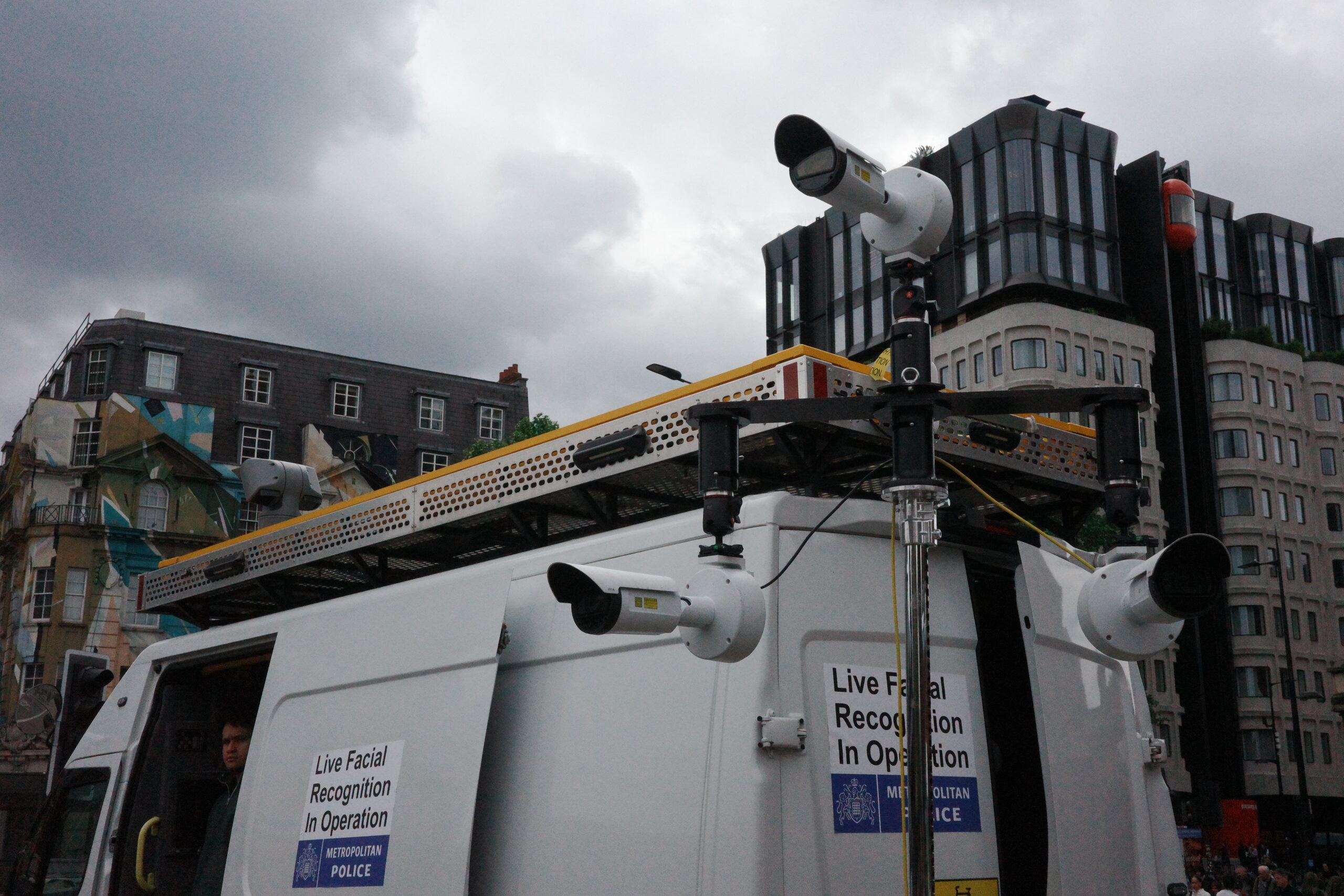
ANPR cameras are being used to target innocent motorists

Posted on by Big Brother Watch Posted in CCTV | 10 Comments

Much of what Big Brother Watch does surrounds our observation that increasingly the law-abiding citizen is being targeted for punitive and spurious reasons by local councils, the police and our national government.

ANPRtruck Sometimes we are presented with newsworthy examples of this behaviour (see here and here) but rarely do we find concrete evidence that uncovers those in authority deliberately abusing their position.

As reported in a sensational piece in the Independent on Sunday:

Police are using controversial car-surveillance technology aimed at catching criminals and terrorists to target members of the public in order to meet government performance targets and raise revenue.

Police whistleblowers claim that intelligence stored on the national Automatic Number Plate Recognition (ANPR) database is "at least 30 per cent inaccurate", which has led to the wrongful arrest of innocent motorists and the seizure of their cars.

Big Brother Watch has already written about the worrying rise of ANPR cameras - surveillance cameras that cross-reference your number plate with police intelligence and data from the DVLA as you drive past. It seems our fears were justified:

Internal documents seen by the IoS suggest zealous use of the ANPR system by some officers in Hertfordshire Police, the lead force for developing ANPR strategies, led to a disturbing culture among its road policing teams.

The target culture has allegedly led to unethical practices during roadside stops, according to concerned police sources. Some officers, they say, trawl through drivers' personal data on police databases to find any reason to arrest. Alternatively, they "wind up" motorists who, in their frustration, become abusive and are then arrested for a public-order offence.

"In short, officers do not have a complete understanding of the law, use flawed databases to justify immediate seizures, fail to adequately research and evidence the basis of their belief and almost certainly knowingly seize vehicles just to satisfy service and personal performance targets," one said.

ANPR-cameras Whistleblowers also expressed concern that managers are "engineering" arrests to meet targets. Officers have been sent to re-arrest drivers fined for driving without insurance. Before cars can be released from the pound the driver has to apply for insurance. "[Officers were] checking with insurers if Mr Smith had declared his recent penalty," said one officer. "If the answer was 'no' they arrested him for obtaining insurance fraudulently."

These 'internal documents' seen by the IoS are simply incredible and deserve far wider recognition and full investigation. Having objected to ANPR previously on the grounds that it was yet another surveillance system in the UK, this report shows that not only is it intrusive – it is leading to false arrests and frankly unacceptable policing. 

In an election year we are very grateful for this timely piece of evidence and will be calling for a commitment to scrap ANPR cameras at the first opportunity from all the parties.

By Dylan Sharpe

More objections to the ugliness of CCTV

Posted on by Big Brother Watch Posted in CCTV | 1 Comment

Hounslow_logo I've written before about how obtrusive CCTV poles can be, dominating and worsening our urban environment.  The most recent Hounslow Chronicle features complaints from a local councillor about their new CCTV installations:

Councillor Andrew Dakers believes they are "ugly" and "visually intrusive" and there should be another way found of installing the Community Safety Cameras.

"These are really chunky black poles and I don't know why they chose to use them instead of just putting the cameras on top of buildings."

They're obviously a talking point for people in the area, as the newspaper refers to the "mysterious black poles that have popped up along Hounslow High Street.." and their readership must be presumed to know what they mean.

Do you live or work in Hounslow?  Have you seen these things?  Might you be able to tell us what you think, or, even better, take a picture and send it in to us?

I should also point out that Hounslow is the same authority which has installed talking CCTV, buying themselves an intrusive tool at a cost of £1.8 million.

Perhaps, as other residents have done, given the cost and the unsightliness, the good people of Hounslow might wish to revisit the whole question of having more CCTV in the first place.

By Alex Deane