This morning, The Sun carries an article making several claims about the draft Communications Data Bill that bear a striking resemblance to
“Mrs May says the new law would be a massive help in preventing another 7/7-style atrocity on Britain’s streets.”
However, the 7/7 inquest stated: “Post 7/7 enquiries revealed that between 22nd February and 15th June 2005 there were forty one telephone contacts between mobile phones attributed to Tanweer, Khan, and Lindsay and hydroponics outlets. It is unlikely these could have been detected by surveillance given the large number of untraceable “operational” phones used by the bombers and only attributed to them once their identities and details were known.”
“and could stop savage events like the gunning down of brave women police officers Nicola Hughes and Fiona Bone in September”
How would data prevent such a cold-blooded act by someone wanted for another crime that had taken place a month earlier? The officers were responding to a routine report of a house burglary – are we now saying before responding to routine calls, police officers will be expected to check the website browsing, social media messages and emails of every individual in the vicinity?
“Anybody who is against this bill is putting politics before people’s lives.”
When Parliament rejected 90 day detention, Tony Blair said “People will believe parliament was deeply irresponsible” while Hazel Blears (then a Home Office minister) said “It is right that people question and probe these issues but the three-month period is what the police and security service say is necessary.”
The Coalition was rightly applauded for not accepting this rhetoric and highlighting there was no evidence to support the claims being made. The rhetoric of today’s article is groundhog day for anyone familiar with the New Labour playbook of how to get terrorism legislation passed.
Mrs May said: “Criminals, terrorists and paedophiles will want MPs to vote against this bill. Victims of crime, police and the public will want them to vote for it. It’s a question of whose side you’re on.”
This is very similar to Tony Blair’s words on 90 day detention: ”the police and those charged with fighting terrorism said the 90-day power was needed to make the country safe….. We believe this is right for our country. We believe it is necessary to protect our country from terrorism and I’m only sorry you don’t agree.”
The approach of presenting the bill as aimed at only terrorists, paedophiles and serious criminals is something the Joint Committee raised with the Home Secretary, noting the purposes of the Bill go much, much wider than these offences.Sir Paul Kennedy, the Interception of Communications Commissioner, told MPs that the powers could be justified when investigating incidents such as fly tipping.
We have highlighted
numerous ways that public safety could be improved without requiring blanket data retention on every one of our emails, social media messages and website visits.
It’s also worth noting that the two examples cited in the article could be addressed by alternative routes.
Example 1: “A MAJOR criminal investigation was launched into a website used as a secret portal for viewing more than 2,000 indecent images of children. Both were jailed. But others escaped because internet access companies had no record of who had used the IP addresses.”
Being involved in the production or distribution of child pornography is illegal. It is a serious crime. In this case, it would be proportionate to go to internet service providers and ask for the IP address of any computer accessing the website, and for data to be retained about that use. Those people could be identified and prosecuted without needing to record every website visit of every person.
Example 2: An online counsellor called police to tip them off that an emotional man was feared to be on the verge of suicide. Cops found out where he lived by tracing the IP address and raced round to his home. It was only by chance that the internet service provider had a record of the man’s address and police were able to help him.
What happened to terrorism, paedophiles and serious criminals? There is a wholly separate argument about whether the state should try and intervene in preventing suicides in such a way, but in this case it is about the ability to track in real-time the identity of a single individual when some identifying information – in this case an IP address – is already known. The powers to track an individual already exist – and in this case none of the data used was details of emails, website visits or social media messages, which the bill proposes to log for everyone for one year.
Southwark Council has taken it upon itself to install ‘lie detector tests’ to help root out benefits cheats. The Council claim that the technology, which analyses phone calls for signs of stress in the speaker’s voice, has helped catch 4,000 fraudsters over a four month period.
The voice analysis works by examining the pitch of the callers’ voices when they are asked questions and if the system suspects that someone is telling a lie a beep sounds in the operator’s ear. The operator has then been trained to ask questions which may uncover the truth. The Council has said that anyone who refuses to take part in the call will be visited for an assessment of their claim.
Despite Southwark Council’s claims that the technology is working, the government and academics have voiced their concerns about its reliability. After a trail period in 2008, the Government decided that this technology doesn’t work, and is barely any more reliable than flipping a coin. An academic study described the technology as being little better than astronomy at detecting fraud.
Considering that both the Government and Academics have ruled out the reliability of the technology it is clear that Southwark Council are wasting people’s money on an illiberal and unproven technology without remorse and is a disgrace. The Council’s approach to dealing with benefit cheats stinks of ‘guilty until proven innocent’ and perhaps it would be more useful to introduce more rigorous checks and testing before benefits are handed out.
This once again demonstrates how quickly councils will jump to ridiculous, dodgy technology to treat their residents as suspects who cannot be trusted. In the interests of equality I hope the same technology will be rolled out in council meetings and the public given access to the results.
If Parliament votes on the press, the press isn’t free. To split hairs between statutory underpinning and statutory regulation is not an acceptable distinction in a free and democratic country.
However, Lord Leveson is absolutely right to recognise that the current legal framework fails to protect privacy by not including the potential for those who steal or abuse personal data to face a jail sentence. His voice, added to those of campaign groups and the Home Affairs and Justice committees of Parliament sends a clear message to the Government that continued delay and inaction on this issue is unacceptable. Custodial sentences, already on the statute book, should be enacted immediately.
The media must abide by the law, of course, but it must also be fearless in holding power to account. Even a slight diminishing of its undaunted view of power will bring comfort to those who seek to evade and avoid scrutiny. Every citizen would be worse off and we would be held up in lesser regimes around the world as justification for Governments muzzling the press.
The Information Commissioner’s Office (ICO) has today served monetary penalties totaling £440,000 on two owners of a marketing company which has plagued the public with millions of unlawful spam texts over the past three years.
This is the first time that the ICO has used its power to issue a monetary penalty for a serious breach of the Privacy and Electronic Communications Regulations (PECR) since these powers were approved in January 2012.
The investigation under the Data Protection Act into the pair continues, however the only penalties available under that legislation are fines.
Fining these two individuals may sound a serious step, but given they have deliberately sought to exploit people they should be facing jail, not fines that may well end up never being paid. The Government continues to dither about introducing a custodial sentence for breaching the Data Protection Act, despite it already being on the statute book, and this is unacceptable.
People need to know that unlawfully using or trading personal information, whether that being to access private information for gain or to target people with unwanted spam messages will be taken very seriously and a prison sentence is the best deterrent available. We risk a situation where the fines levied by the Information Commissioner become a cost of doing business for the most serious abusers of our personal data.
This action is welcomed, but until the courts can properly punish people with a prison sentence, our privacy will not be as well protected as it should be.
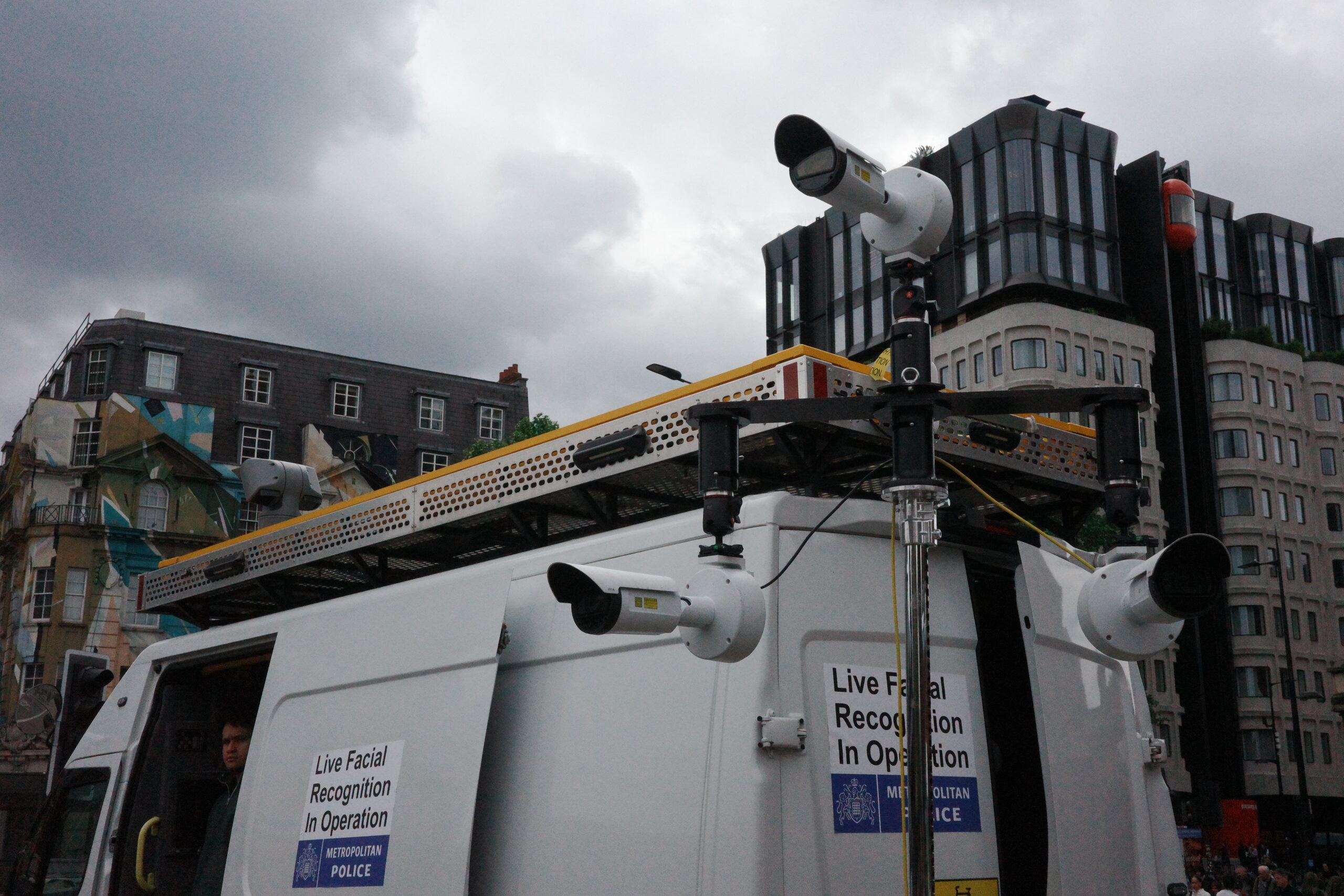
Profit appears to trump privacy yet again, with some shops fitting secret cameras in mannequins to spy on customers’ shopping habits. The technology has been available for almost a year, and is already being used in three European countries and in the U.S.
The EyeSee dummy holds a camera behind its eyes which feeds images into facial recognition software that logs the age, gender and race of shoppers. This information is then used to provide retailers with information that can be used to improve their marketing strategies. The makers boast: “From now on you can know how many people enter the store, record what time there is a greater influx of customers (and which type) and see if some areas risk to be overcrowded. Read more
“Secret trials and non-disclosure of evidence are potential characteristics of repressive regimes and undemocratic societies.”
So said Lucy Scott-Moncrieff, president of the Law Society of England and Wales, and Michael Todd QC, chairman of the Bar Council, in a letter to Government ministers responsible for the Justice and Security Bill on Saturday.
The Bill is now in the Lords for its second reading, and today the Daily Mail has called on the Lords to “halt this draconian plan”.
We wholeheartedly support both statements.
Read more